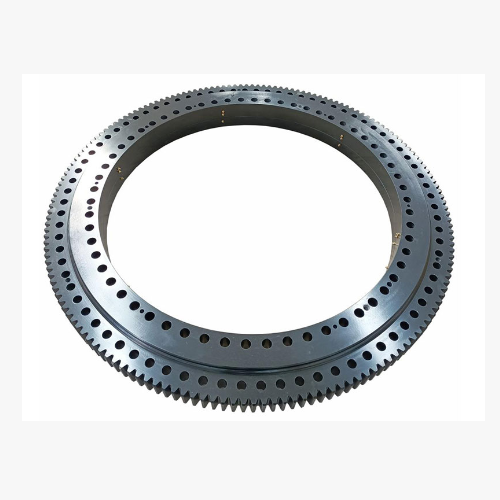
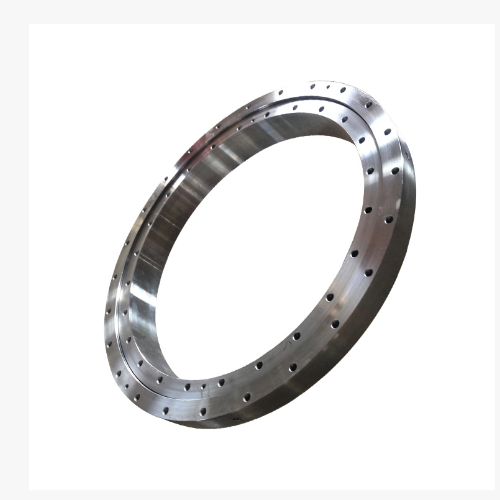
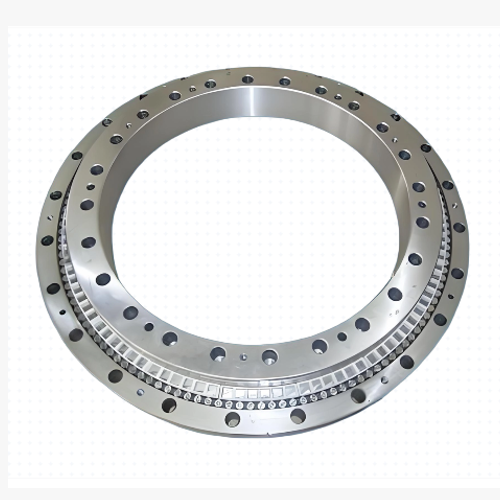

As a leading manufacturer of specialized slewing bearings, we offer our premium Three-Row Roller Slewing Bearings, designed for the most demanding heavy-duty applications. This bearing type features three independent raceways—two axial and one radial—each equipped with cylindrical rollers. This unique, segregated design allows each row to be optimally dimensioned to handle specific load directions.
The separated raceways enable the bearing to simultaneously support heavy axial loads (in both directions), substantial radial forces, and high tilting moments with minimal clearance and maximum rigidity. Compared to single-row or double-row bearings, the three-row roller design offers a significantly higher load capacity and a longer service life under extreme operating conditions.
Engineered for durability and precision, these bearings are manufactured using high-quality induction-hardened rings and precision-matched rollers to ensure smooth rotation and consistent performance. They are the ideal solution for extra-heavy machinery such as large excavators, tunnel boring machines (TBMs), heavy-duty cranes, wind turbine generators, and offshore equipment. Our three-row roller slewing bearings provide the reliability and robust performance required to keep your critical operations running efficiently.
1. What is the structural design of three-row roller slewing bearings?
These bearings feature three separate raceways with two rows of rollers handling axial loads and tilting moments (horizontal arrangement), while the third row handles radial loads (vertical arrangement). The upper and lower rows transmit opposing thrust loads, combining to manage moment loads, while the middle row handles all radial loads independently.This three-row design allows each load direction to be carried by dedicated roller sets .
2. Why are these bearings considered the highest capacity slewing bearings?
Three-row roller bearings offer the highest load capacity among all slewing bearing types under identical dimensions.The separate raceway design enables line contact instead of point contact, significantly reducing contact stress compared to ball bearings.Each roller row is sized specifically for its load direction, and load distribution can be precisely calculated for each roller row independently. This makes them ideal for applications requiring maximum bearing capacityin limited spaces.
3. What are the typical applications for three-row roller bearings?
These bearings are specifically designed for heavy-duty machinery requiring large diameters and extreme load capacity. Typical applications include bucket wheel excavators, wheel cranes, marine cranes, port machinery, ladle turrets, large-tonnage truck cranes.stacker-reclaimers, heavy transport equipment, and shield tunnel boring machines.They excel where axial loads, tilting moments, and significant radial loads must be handled simultaneously.
4. What installation precautions are required for these bearings?
Installation requires meticulous preparation: ensure all mounting surfaces are clean, dry, and free from burrs or paint.Follow the "symmetrical tightening" principle, tightening bolts in 3-4 diagonal stages to specified torque values.Never hammer directly on rolling elements -8. Check contact surface flatness and levelness before installation.After installation, manually rotate to check for smooth operation and abnormal noise.