Q1: What is an excavator slewing bearing, and what is its primary function?
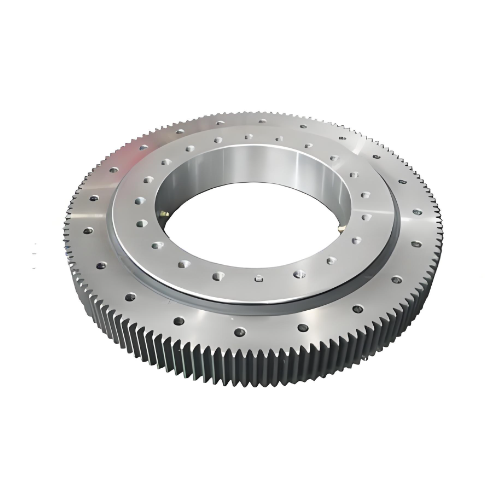
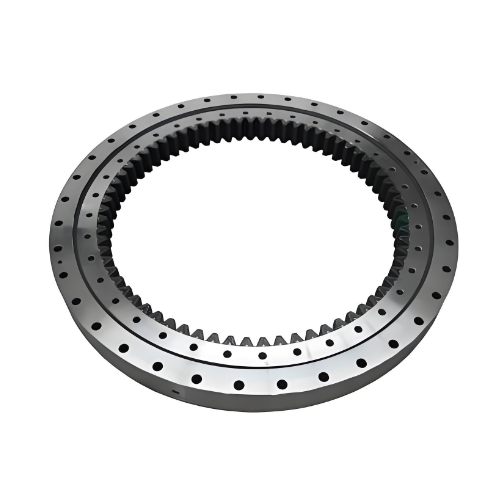
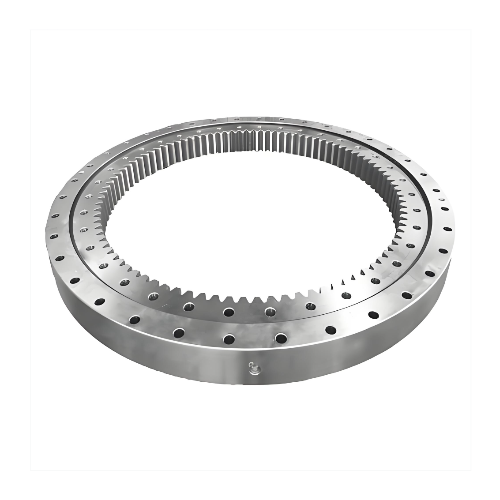
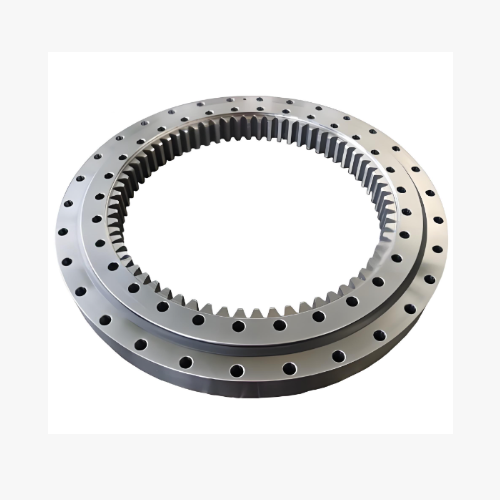
A: An excavator slewing bearing, also known as a slewing ring or rotary bearing, is a critical rotational component that enables the smooth, 360-degree rotation of the excavator’s upper structure (the house) relative to the lower undercarriage. It simultaneously supports axial and radial loads as well as tilting moments generated during digging and lifting operations.
Q2: What are the common causes of failure in excavator slewing bearings?
A: Common failure modes include:
Indentations (Brinelling): Caused by static overload or severe shock loads, creating permanent dents in the raceways.
Lubrication Failure: Inadequate or contaminated grease leading to metal-to-metal contact and accelerated wear.
Seal Failure: Damaged seals allow contaminants like dust, sand, and water to enter the bearing, causing abrasive wear and corrosion.
Bolt Fatigue: Loosening or fracture of the mounting bolts due to improper tightening torque or dynamic loads.
Q3: How do I select the right slewing bearing for my excavator model?
A: Selection is based on several key factors:
Load Analysis: Calculating the static and dynamic axial/radial loads and the tilting moment.
Geometric Constraints: Matching the mounting hole patterns, pitch circle diameter, and overall height to your machine’s design.
Gear Requirements: Determining the required gear module, number of teeth, and material treatment (induction hardened tooth flanks).
Operating Environment: Considering factors like extreme temperatures or corrosive conditions.
We recommend providing your equipment specifications to our engineering team for a precise match.
Q4: What is the recommended maintenance schedule for an excavator slewing bearing?
A: Regular maintenance is crucial for longevity.
Daily: Inspect the seals for damage and remove any debris packed around the bearing.
Weekly (or every 50 hours): Check the torque of all mounting bolts.
Regularly (every 100-250 hours, depending on usage): Relubricate the bearing through the grease nipples while slowly rotating the house to ensure even distribution until fresh grease purges from the seals. Use the specified high-quality EP2 grade grease.
Q5: How do I ensure the slewing bearing’s gear teeth last as long as the bearing itself?
A: To maximize gear life:
Proper Lubrication: Ensure the open gear teeth are regularly coated with appropriate open-gear grease.
Alignment: Verify that the pinion gear and the slewing bearing gear are correctly aligned with proper backlash to prevent uneven wear.
Avoid Shocking Loads: Minimize sudden, jarring rotations under full load, which can chip or crack gear teeth.
Q6: Do you offer custom slewing bearings for non-standard excavator designs?
A: Yes, as a professional manufacturer, we specialize in both standard and custom solutions. We can manufacture slewing bearings to your exact drawings or develop a design based on your load and dimensional requirements, including variations in gear cutting, material grades (e.g., 50Mn, 42CrMo4), and sealing options.
Q7: What quality control measures do you implement during production?
A: Our manufacturing process adheres to strict quality standards. Key inspections include:
Material Certification: Verification of raw material chemical composition.
Heat Treatment Validation: Hardness and depth checks of the induction-hardened raceways.
Gear Inspection: Precision measurement of gear runout and tooth thickness.
Non-Destructive Testing: 100% ultrasonic inspection of bar stock and magnetic particle inspection of finished rings to detect internal or surface flaws.